

Changing the story for domestic abuse survivors
Violence against women has been in the news this year. From the murders of Sarah Everard and Sabina Nessa through to reports of women being injected with date rape drugs in nightclubs and our schools having a rape culture, it’s becoming increasingly obvious that our streets, clubs and even our schools are not always safe places for women.
If you add to that the shocking rise in domestic abuse during the lockdowns, we realise that actually, women can experience danger anywhere.
It’s not a new phenomenon. The Bible portrays just such a scene in Judges 19. Here we read of a woman, who is maltreated at home, neglected and rejected by her husband and finally abused and murdered in the streets by a gang of men and it’s all made possible by a culture that said her life and wellbeing was of less value than the men in her life.
That story ends with God’s people coming together in outrage and anguish, saying “We must do something! So speak up!” (Judges 19:30)
It’s a call that carries across the ages and sits at the heart of all Restored does. We have a mission to speak up about violence against women and girls, and to do something to equip the church to stand against domestic abuse and support survivors.
In 2018 Restored conducted research with the Universities of Coventry and Leicester which showed that 1 in 4 churchgoers has experienced an act of domestic abuse within a current relationship. Despite this, our research also suggested domestic abuse is a great taboo in many of our churches. Nearly 60% of respondents had never heard domestic abuse mentioned in a sermon and only two in seven of Christians surveyed felt their church was adequately equipped to deal with a disclosure.
Those are things we can do something about, we can tackle the difficult topics in our sermons, reach out to support our local refuge and get trained to respond to disclosures . We can make it clear that we care, that there is a safe place for people to talk and find support.
How do we spot the signs?
If you believe that someone could be a victim of domestic abuse, there are signs that you can look out for including:
● A significant change in character - becoming withdrawn, or isolated from family and friends
● Having bruises, burns or bite marks
● Always needing to check with their partner to see if they can commit to volunteer, join a group or have coffee etc.
● Always being joined by their partner at events or being met straight after
● Being constantly rung or texted by their partners whilst they are in a group or with you.
This is just a short list, and of course, all these things can be signs of something else or nothing at all. If you are concerned for someone, we’d always recommend treading very carefully and asking open questions.
● How are you?
● You’ve been quiet recently, is everything OK?
● You seem worried, do you need to chat?
If someone is being abused, they need to be allowed to open up in their own time and at their own pace. What you can do is listen and believe them.
Your response to someone’s disclosure can change the course of their life. If you question the truth of their story, they may never tell anyone ever again, if you offer a supportive ear, you may be the first part of their journey to freedom.
Rachel’s story shows just what a difference a church can make in a survivor’s story:
“I was married to a man who not only neglected and gaslit me, but who systematically convinced me that no one really liked me, that they tolerated me for his sake and that I was a deep embarrassment.
My world was a chaotic place where I had no idea what was true anymore. When the violence started, it was almost a relief; I knew what that was.
It’s hard to recover. But the truth is, though I occasionally have nightmares and can be insecure, it’s not the narrative of my life anymore. I live in freedom.
God has been incredibly gracious. My church wrestled with their theology but knew that they loved me, and showed it. One couple helped me decorate the house I rented, another sorted out the garden. One lady saved and bought me a new present every month - a salt and pepper shaker, a set of mixing bowls and a vase. 18 years later I still have them; they remind me of the love I was shown when I most needed it.
My church were God’s hand and feet to me, showing me I did have value. It took a long time, but God gently put the pieces of my heart back together. I don’t live in fear anymore, I am loved and I know it.”
-----
If you’d like to know more about how your church can change the story for a survivor of domestic abuse please visit: www.restored-uk.org/beacon-of-hope
Restored hosts an online community for christian women who have been subjected to domestic abuse. If you’d like to find out more or join us go to: www.restored-uk.org/survivors
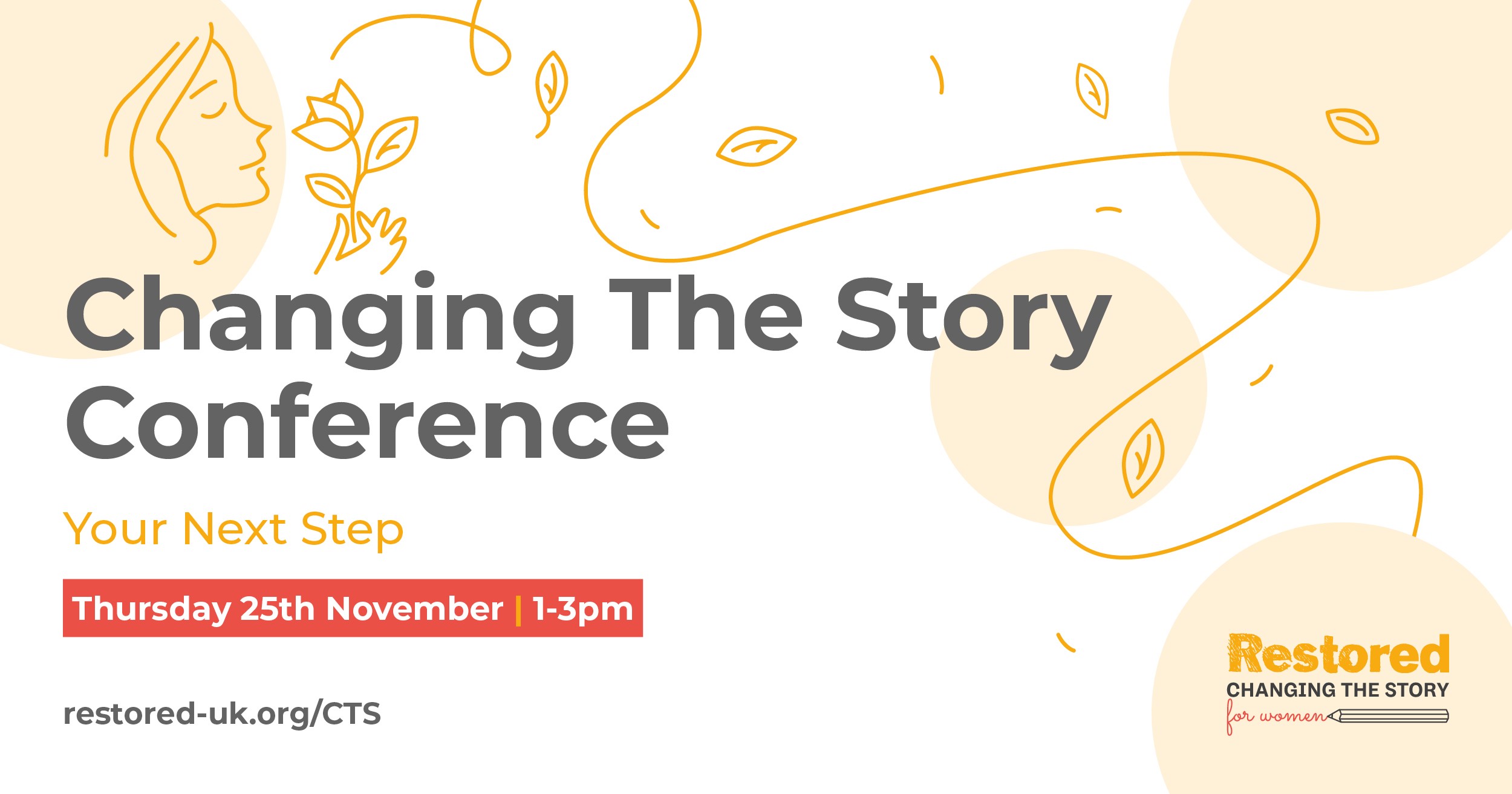
Why not find out more about the work of Restored and how you and your church can stand against domestic abuse at our Changing the Story Conference on 25th November 1-3pm.
-----
Disclaimer: The views and opinions expressed by guest contributors are those of the author. Although broadly in keeping with the objectives of Jubilee+, the views and opinions do not necessarily represent those of the Jubilee+ team and directors and/or other contributors to this site.